This article first appeared in The Daily Utah Chronicle on November 24, 2025
Students argued the pros and cons of generative AI at the Debate Society’s First Annual Great Campus Debate.
By Leo LeBohec, News Writer
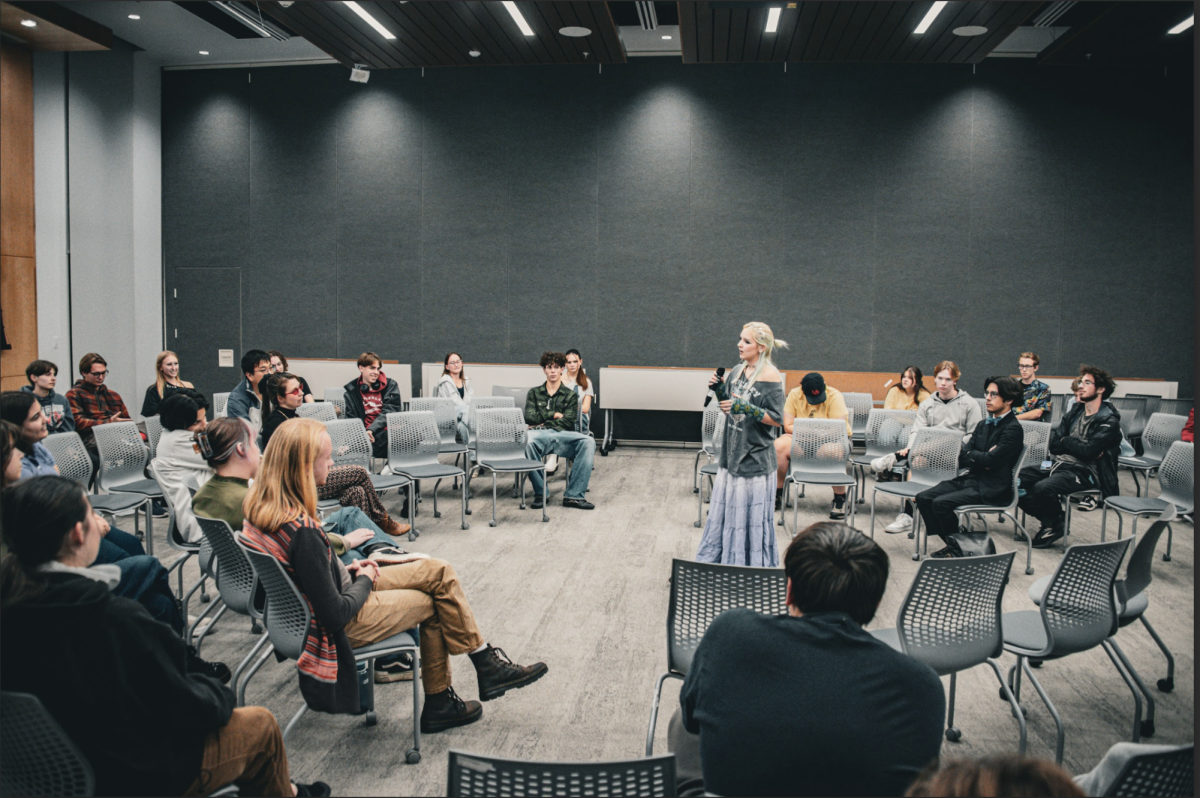
The John R. Park Debate Society hosted the First Annual Great Campus Debate on Tuesday, Nov. 11, to discuss whether generative AI does more harm than good.
According to the website, the open forum-style debate — led by the College of Humanities, the Debate Society and Insight Debate — was created to “unpack the resolution” regarding generative AI.
A push for dialogue
Insight Debate and Dialogue is an organization that works with universities across the country to promote open inquiry and civic conversation, according to an interview with April Lawson, the company’s co-founder and debate chair. Insight Debate collaborated with the College of Humanities and the debate society to organize the event.
Averie Vockel, Assistant Director of Forensics and debate society Public Outreach Manager, said in an interview that the society’s “Debate Across the Curriculum” (DAC) initiative seeks to spread debate education to different areas of study.
The initiative, with grant funding from the Arthur Vining Davis Foundation, introduced this type of open discourse to 22 classrooms this fall, Vockel said. “One of the main goals is to see what debate education and critical thinking that comes with debate has to offer different areas of the campus,” she said.
Lawson said the initiative will become more present across campus next year. “It’s a spirit of collective search for truth, so it’s actually not competitive, it’s collaborative,” she said
Averie said to expect a Second Annual Great Campus Debate next fall, although Associate Director of Forensics and debate society director Duncan Stewart said the “format can change [and] genre of debate can change.”
Stewart added that the number of attendees, 65 in total, “demonstrates a demand for this sort of participatory and meditated forum here on campus.” He said he wants to share the excitement of debate with a wide variety of students, not just those who join the debate society.
Student experience
U student Damon Nasser said the debate’s format allowed him to speak his mind more freely. “I was proud to be able to share my opinion and I got a lot of taps, which was nice and encouraging,” he said in a testimonial. In some debate forums, “tapping” is a way for the audience members to show their approval by tapping their lap.
Another student who spoke at the debate, Hannah Donaldson, said she was excited to hear perspectives that were different from her own. “It’s refreshing seeing people discuss with nuance,” she said in her testimonial.
Sampson Isafi said he enjoyed the format because it provided the opportunity to answer questions in a regulated manner. In his testimonial, he said these formalities “are necessary in order to maintain a culture of debate, so that there’s something that distinguishes it from ordinary conversation.”
The speeches alternated between affirmative and negative, with the first two speakers having prepared beforehand and the rest volunteering from the audience. After speaking, each student had the opportunity to respond to questions passed from the audience to the chair then finally, to the speaker. The debate had no teams.
Social trust
Lawson said she initially piloted this form of collaborative debate through the non-profit Braver Angels, which aims to bridge partisan divides. Lawson said the U is investing in this style of discourse more than some other schools she has worked with. “It’s legitimately in the running to be the national leader on civil discourse initiatives,” she said.
Lawson attributed the university’s willingness to collaborate to Utah’s high level of social trust measures. According to a Pew Research Center study from May 2025, Utah is among the states with highest “social trust,” a concept Pew describes as “a belief in the honesty, integrity and reliability of others.” Close to half of adults in Utah say most people can be trusted, whereas about a quarter of adults say the same thing in low-trust states like Louisiana, Mississippi and West Virginia.
“[Social trust is] part of what makes conversations like this fruitful,” Lawson said.
Back to all Stories